The Huddle Before the Third Quarter: A Simple Halftime Plan for Youth Coaches
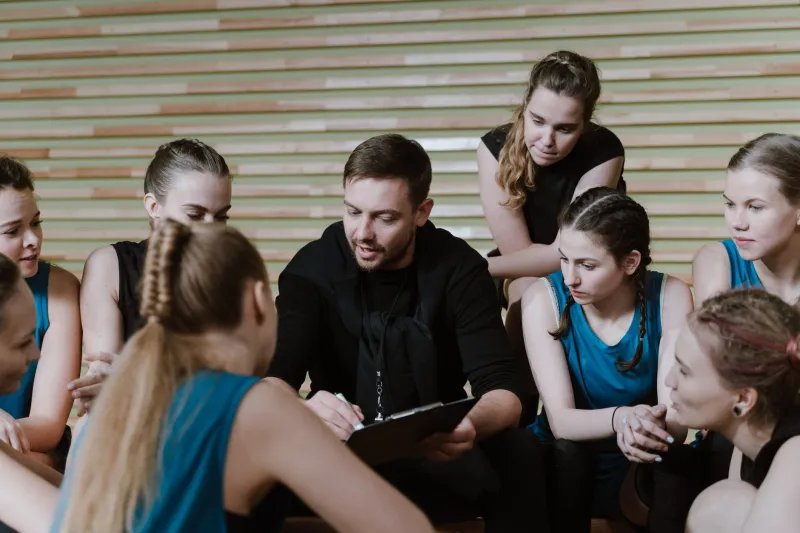
Halftime in a youth basketball gym rarely looks like a coaching clinic. It looks like a bench full of water bottles, a parent waving from the bleachers, an official checking the clock, and a coach trying to cram a season's worth of corrections into 120 seconds. The orange slices show up. The strategy sometimes does not.
The problem is not that coaches care too little. It is that halftime invites too much. The scoreboard is right there. The first-half mistakes are fresh. Every player seems to need a different message. Before you know it, the buzzer is sounding and the team is heading back onto the floor with a head full of instructions and no clear idea which one matters most.
A better halftime huddle is not a longer speech. It is a shorter one with a sharper shape. Think of it as a two-minute reset: one defensive correction, one offensive habit, and one deliberate breath before the ball goes back in play.
The Clock Is Shorter Than It Feels
Coaches sometimes plan halftime as if they have a timeout plus a film session. In most rec, middle school, and community league settings, they do not. Players need to reach the bench, find water, check in with a parent, and hear whatever the officials need to say. The actual coaching window can shrink fast.
That is why the best halftime coaches prepare before the game, not during the break. They jot down one thing they expect to see and one thing they need to fix. They keep an assistant or a trusted parent nearby to help with water and logistics. They resist the urge to turn halftime into a lecture about effort, attitude, and the scoreboard all at once.
The huddle is not the place to solve every problem. It is the place to make the second half feel simpler than the first.
Stop, Start, Breathe
The two-minute reset can fit on an index card. It has three parts, and each part has a job.
Stop: one defensive issue. Pick the mistake that is hurting the team most, then give players a physical cue they can repeat. Avoid vague commands like play harder or communicate more. Be specific. For a rec team getting beaten on baseline drives, the cue might be force middle. For a middle school group losing track of cutters, it might be head on a swivel after every pass. For a community league squad reaching instead of moving its feet, it might be hands up, chest out.
Start: one offensive habit. Choose something that will make the next possession cleaner, not something that requires a new playbook. For younger players, it could be get one paint touch before a shot. For middle schoolers, it could be fill the corner before you cut. For older community players, it could be reverse the ball once before settling for a jumper. The habit should be easy to say and easy to spot from the bench.
Breathe: one calm sendoff. The last piece is not motivational filler. It is a transition. Ask a player to repeat the stop cue and the start cue. Keep it light. A simple question works: What are we stopping? What are we starting? Then have the team take one breath together and clap it in. No long speech about the score. No promise about a comeback. Just clarity and a calm walk back to the floor.
What to Leave Out of the Huddle
Most halftime huddles do not need stat sheets. They do not need a referee review, even when the calls have been frustrating. They do not need a player-by-player critique in front of the bench. Save the individual teaching for practice, for a quiet moment after the game, or for a short note at the next film session.
The same goes for motivational monologues. Youth players can smell a halftime speech from a mile away, and they usually respond better to a clear task than a raised voice. If the team is flat, say so briefly. If the team is playing hard but making the same mistake, address the mistake. Keep the emotional temperature steady.
One more thing: do not let the halftime huddle become a parent meeting. Families want to help, and they often have useful observations, but the two-minute window is not the time to sort out carpool plans, playing time questions, or a disagreement in the bleachers. Protect the huddle.
Rec League: The Baseline Is Burning
Imagine a fourth-grade rec game where the other team has scored most of its baskets on baseline drives. The coach has three choices at halftime: yell about defense, switch to a zone, or give one simple cue. The reset approach says give one cue.
Stop: force middle. Start: get a paint touch on every possession. Breathe: ask one player to repeat both cues, then send the team out. That is it. The coach can still make adjustments later, but the players leave the bench knowing exactly what the second half is about. They are not carrying five corrections into the third quarter.
Middle School: The Weakside Nap
Middle school games often turn on weakside awareness. One team watches the ball, the other team cuts backdoor, and suddenly the coach is calling a timeout to fix something that could have been addressed at halftime.
A workable halftime reset might sound like this: Stop ball-watching. Every time the ball is reversed, turn your head and find your player. Start with one drive-and-kick before the first shot. Then breathe. Ask the team to repeat the defensive cue. Keep the offensive habit simple enough that it does not compete with the defensive fix. Two ideas are enough.
Community League: Fouls and Fast Breaks
With older community league players, halftime can drift into strategy talk about matchups and sets. Those things matter, but they are not always the best use of two minutes. If foul trouble is the issue, make the correction concrete.
Stop reaching on jump shooters. Hands up, chest out, move your feet. Start with a rebound outlet on every defensive board. Breathe. Let the point guard repeat the outlet rule. Let the team clap. The coach has just addressed the two things most likely to change the game without turning halftime into a seminar.
The Orange Slice Can Wait
The orange slice is a ritual, and rituals have their place. But it is not a strategy. The real halftime work is deciding what matters most, saying it clearly, and trusting players to carry a small message back onto the floor.
Two minutes is not much. That is exactly why it should be protected. Give the team one stop, one start, and one breath. Send them back out calm. The third quarter will bring enough noise on its own.