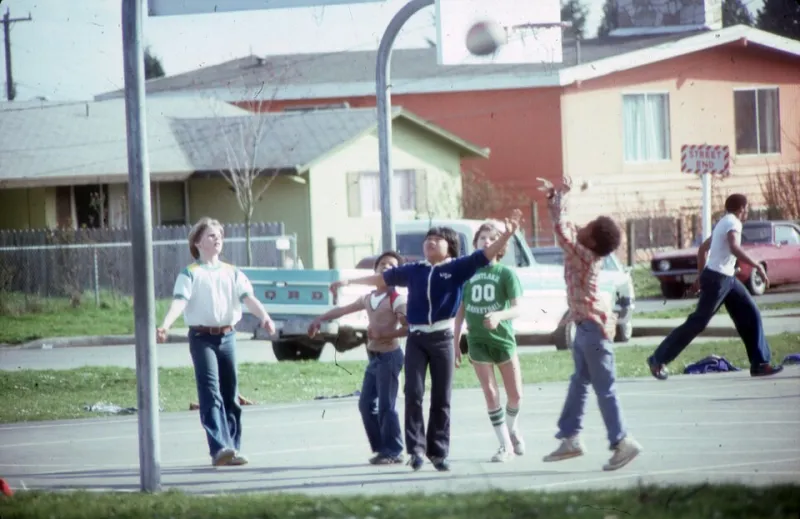
The Real MVP Sits in the Minivan: How Parents Become Their Kid's First Coach Without Even Trying
Photo: Unknown authorUnknown author or not provided, Public domain, via Wikimedia Commons
Every young hooper in America has a highlight reel they never get credit for. It's the parent who found the missing left sneaker at 7:42 a.m. before a tournament in the next county. The one who ran the carpool like a well-oiled NBA schedule. The one who said nothing — nothing — on the ride home after their kid went 1-for-9 and cried in the backseat.
We spend a lot of time on this site talking about training drills, shooting form, and league trends. But if we're being honest, the single biggest influence on a youth player's development isn't a trainer with a whistle and an Instagram following. It's whoever's in the driver's seat.
The Carpool Is the Program
Think about the math. A kid might see their coach twice a week for two hours. Meanwhile, a parent is there at breakfast, at drop-off, in the driveway rebounding passes in bad lighting, and on the couch after a brutal loss. That's not a supporting role. That's the main influence wearing a lanyard they got for free at the gym door.
The best youth basketball parents understand this. They know they're coaching even when they don't mean to be — through their tone after games, their body language on the sideline, and the way they talk about other kids and officials in the car. Kids absorb all of it. Every eye-roll at a referee is a lesson. So is every "I loved how hard you competed today."
When to Encourage, and When to Zip It
Here's the part nobody hands you a pamphlet for. So consider this the pamphlet.
Encourage effort, always. "Great hustle on that dive" lands better than "You should've had that steal." Effort praise survives a bad shooting night. Result praise doesn't.
Step back when they're coached. If a kid is in practice or a game, the coaches get the floor. Your kid doesn't need two voices yelling instructions — especially when the second voice is coming from the bleachers and contradicting the first.
Save the teaching for the driveway. If your kid asks for help, help. If they don't, make the driveway a place where basketball is fun, not a remedial clinic. Some of the best player development in this country happens over a game of H-O-R-S-E with zero pressure attached.
Let them be upset. After a tough loss, resist the urge to fix it immediately. A quiet "tough one, huh?" beats a fifteen-minute film session in the parking lot. Kids process losses differently than adults, and most of them process just fine — if we let them.
The Sideline Yeller Problem
Every gym has one. The parent who coaches every possession from the bleachers like they're being paid a veteran's maximum. "Box out!" "Shoot it!" "Pass the ball!" Their kid's shoulders creep up toward their ears a little more each quarter.
Nobody sets out to become that parent. It happens one enthusiastic shout at a time. The fix is simple but not easy: pick one thing to say all game — "Let's go, Blue!" — and stick to it. If you can't, sit near a neutral friend who will gently kick your shin.
Coaches notice, by the way. In a good way and a bad way. Ask any youth coach in America what makes their season and they'll say supportive, low-drama parents. Ask what ruins it, and you'll hear the same story with different names.
You're Raising a Person Who Plays Basketball
One more thing, and it's the big one. Somewhere around 98% of youth players won't hoop past high school. That's not a downer — it's the point. The dribbling and the shooting are temporary. What sticks is whether the game felt like joy or judgment.
So be the parent who makes it joy. Pack the snacks. Learn the other kids' names. Celebrate the assist as loud as the bucket. And on that quiet drive home after a rough game, when your kid stares out the window waiting to see what you'll say — say the thing every young hooper needs to hear:
"I love watching you play."
Then turn up the radio, grab burgers on the way home, and let the 6 a.m. carpool take care of the rest. That's how heroes rise — one unglamorous ride at a time.