The Quiet Fifth Starter: How Youth Leagues Can Keep the Volunteer Table Crew Alive in 2026
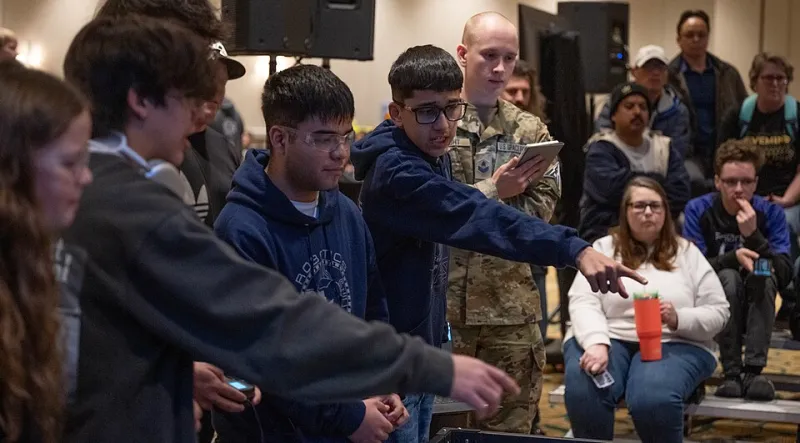
Photo: U.S. Space Force photo by Staff Sgt. Jaime Sanchez, Public domain, via Wikimedia Commons
At 5:42 on a Tuesday, the gym is already loud. Balls are bouncing off the side wall, a coach is counting players by name, and somebody is asking whether the clock is on. Behind the scorer’s table, Denise is doing three things at once: filling out the book, checking a roster on a tablet, and telling a nervous eighth-grader that no, the game has not started yet.
Denise is not a paid official. She is a grandmother, a former middle school point guard, and the reason the night will actually happen. Every youth league has a Denise. Or it used to. In 2026, the volunteer table crew is thinner than most people realize, and the shortage is starting to show up in places parents notice: late starts, wrong foul totals, confusion over possession, and that awful stretch where nobody seems sure whether the score is 34–32 or 36–32.
The scoreboard is not just a scoreboard. It is the shared memory of the game. When the people running it disappear, the whole gym feels it.
The Job Nobody Auditions For
The table crew is one of the strangest volunteer roles in youth sports. It requires focus, but it happens in the nosiest part of the building. It carries real responsibility, but it often gets treated like a folding-chair favor. A scorekeeper might be a parent who was asked at 5:30 because someone did not show. A clock operator might be a former player who knows the game well enough to sense when something is off. A bookkeeper might be the only adult in the gym who notices that a kid has been credited with the wrong number.
In community basketball, these roles are usually stacked on top of everything else. The same person who runs the table may also be the team parent, the carpool organizer, and the one who brought orange slices. That works until it does not. One move, one new job schedule, one season of sideline complaints, and suddenly the table is empty.
What Changed by 2026
Digital tools have made parts of the job easier. League apps can handle schedules, rosters, and live scoring. Tablets can sync with streaming setups. A scorekeeper can sometimes correct a mistake without hunting down a paper book. But the same technology has added layers to the role. Volunteers now juggle an app, a clock, a scoreboard, fouls, possession arrows, and sometimes a livestream chat that moves faster than the game.
There is also the quiet pressure of being visible. A parent watching from the bleachers can pull up a score on a phone and compare it to the gym board in real time. A grandparent can text a coach about a foul that was not entered. A livestream viewer can comment on a clock mistake before the next possession ends. None of that makes the volunteer’s job impossible, but it does make the role feel less like a favor and more like a public performance.
That matters for recruitment. Leagues often ask people to volunteer without explaining what the job actually is in 2026. “Run the scoreboard” sounds simple. “Manage the clock, the app, the book, and the sideline commentary while staying calm” is a different ask.
The Pressure Is Part of the Problem
Most table volunteers do not quit because they hate basketball. They quit because they feel ambushed. They get handed a tablet with an app they have never used. They get told the clock has a weird button. They get corrected loudly by adults who have never sat at the table. Then they get asked to do it again next week.
The fix is not to tell volunteers to toughen up. The fix is to treat the table like a real position. That means a clear job description, a short training session, and a league culture that protects the people keeping time. A simple pregame rule helps: coaches and parents bring table questions to a designated table liaison, not directly to the volunteer in the middle of a possession. It is not about silencing people. It is about giving the volunteer room to do the job well.
Recruit the Role, Not the Favor
Leagues that keep a full table crew usually stop asking for last-minute favors and start building a bench. Instead of “Can you run the clock tonight?” they ask, “Would you take one two-hour shift every three weeks?” That is a much easier yes.
A few practical moves work well:
- Recruit in pairs. Two volunteers who split clock and book are more likely to return than one person doing everything.
- Ask former players. High school and college students who know the game can be excellent table apprentices, especially if the league offers service hours or a small stipend.
- Build a table sub list. Parents who cannot commit to a season may still cover one game. Keep them in the loop.
- Make the ask specific. “We need someone who can arrive 20 minutes early, run the app, and stay through the final buzzer” is clearer than “help with the table.”
Train Like It Matters
A ten-minute pregame huddle can save a whole night. Show the volunteer where the possession arrow is, how to correct a score, who to call if the app freezes, and what to do when a coach asks a question. Give them a one-page cheat sheet. Pair new volunteers with experienced ones for the first two games. Let them make a mistake without turning it into a courtroom hearing.
Leagues should also decide in advance how errors get fixed. A simple policy—pause, check with the table liaison, correct once, move on—keeps small mistakes from becoming sideline arguments. The goal is not perfection. The goal is a fair, smooth game for the kids.
Retain the People Who Keep Time
Retention is where most leagues lose the table crew. Recognition helps, but it has to be real. Say thank you at the gym. Put volunteers in the league newsletter. Save them a seat and a water. More importantly, give them a way out when life gets busy without making them feel guilty. A volunteer who can say “I need next month off” is more likely to come back than one who feels trapped.
At YocoHoops, we talk a lot about player development, but the table crew is part of the development environment too. Kids notice who keeps the game running. They notice whether adults respect the people doing the quiet work. When a league invests in its table, it teaches players that community basketball is not just about who scores. It is about who shows up.
The scoreboard can go dark for a lot of reasons. The best leagues make sure a missing volunteer is not one of them.